
Top Laundry Mistakes That Put Long-Term Care Facilities at Risk
Long-term care (LTC) facilities rely on linen and laundry services every single day — for resident comfort, hygiene, infection control, and regulatory compliance. Linen isn’t just soft sheets and towels tucked neatly on the bed; it’s a core operational function tied directly to resident safety and quality of care. Clean, reliable linen helps prevent infections, supports skin integrity, and keeps daily routines flowing smoothly.
As the healthcare textile and laundry services industry continues to grow rapidly — with the hospital and medical linen supply market alone projected to expand significantly over the next decade — LTC facilities face increasing expectations around efficiency, quality, and compliance. Estimates suggest the broader linen supply and management services market could reach over $100 billion by 2031 at a CAGR of roughly 9%, driven by sustainability, outsourcing trends, and hygiene requirements.
In this context, mistakes in laundry management aren’t just inefficiencies — they’re risks that can affect costs, resident health, infection rates, and even survey readiness.
Why Laundry and Linen Management Matters in Long-Term Care
LTC facilities handle laundry more intensively than many other settings. That’s because:
- Residents may require multiple linen changes per day due to incontinence, wounds, or personal hygiene needs.
- Linen quality directly affects resident comfort and infection prevention.
- Regulatory bodies (CMS, CDC, state health departments) scrutinize laundry processes in their surveys and audits.
In recent years, the healthcare textile and laundry services market has grown rapidly — driven by higher infection control expectations and outsourcing trends. Industry research projects this market to expand significantly in the coming decade, reflecting increasing demand for efficient and compliant linen services. Trusted partners like Healthcare Linen Services Group provide LTC facilities with reliable linen solutions, from timely delivery to advanced laundering techniques, ensuring resident safety and regulatory compliance.
Common Laundry Mistakes in Long-Term Care — and the Risks They Pose
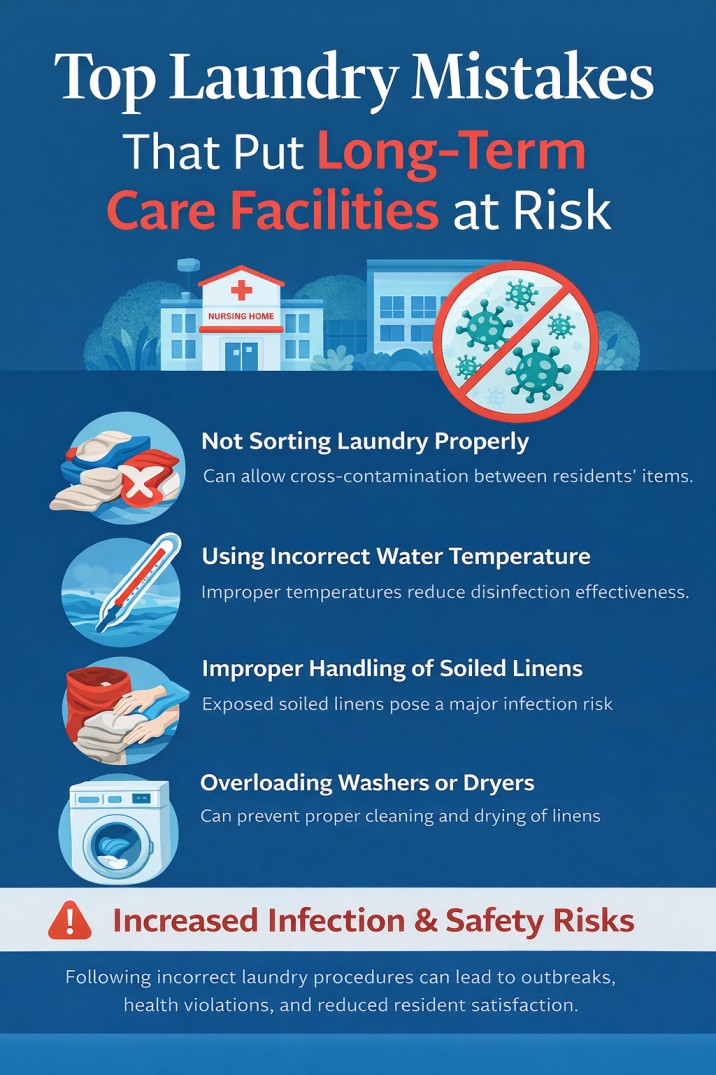
1. Inconsistent or Improper Handling of Soiled Linen
Failing to separate contaminated from clean or lightly soiled linens is one of the most dangerous mistakes in LTC laundry operations. Soiled linens can harbor dangerous pathogens — including C. difficile and other healthcare-associated organisms — and improper handling increases the risk of cross-contamination.
2. Insufficient Inventory & Poor Par Level Planning
Not having enough linens (or having too many) leads to critical shortages, operational chaos, and unnecessary costs. LTC facilities often underestimate how many towels, sheets, or underpads are needed — especially during surges or staffing shortages.
3. Neglecting Quality Control & Inspection
A linen item that’s technically “clean” but has stains, tears, or improper finishing can still pose issues — from resident dissatisfaction to non-compliance with hygiene expectations.
4. Using Incorrect Wash Cycles, Temperatures, or Chemicals
Every fabric type has specific cleaning requirements — and it’s especially true with mixed loads of resident garments, bed linens, and absorbent pads. Low temperatures, excessive chemical use, or improper detergents can damage fabrics and reduce their protective functions.
5. Overlooking Machine & Facility Hygiene
Dirty washers and dryers themselves become breeding grounds for bacteria if not regularly cleaned — a factor often ignored in busy LTC facilities.
6. Failing to Track Costs or Outcomes
Too many LTCs assume laundry is “working fine” until complaints or shortages surface. Not tracking cost per pound washed, turnaround times, or loss rates masks inefficiencies that grow into costly problems.
Market Trends That Shape LTC Laundry Expectations
Healthcare linen services are changing quickly. Across hospitals, clinics, and extended care settings:
- Outsourcing continues to grow as facilities seek cost control and compliance expertise.
- Technology like RFID linen tracking helps reduce loss and streamline inventory.
- Sustainability practices (water reclamation, energy-efficient equipment) are becoming standard.
With aging populations and rising healthcare usage, LTC facilities face more demand for services that deliver both hygiene assurance and operational reliability.
Conclusion
Laundry and linen management in long-term care is far more than housekeeping. Mishandling linen processes can compromise resident safety, strain operational budgets, and jeopardize compliance with regulatory standards. By understanding common mistakes — from segregation errors to poor inventory planning — and working with experienced partners like Healthcare Linen Services Group, LTC leaders can strengthen workflows, reduce risks, and support better care outcomes.